See What It’s Like to Work in the Solid Dosage Forms Department
15 January 2024
, 7 min.

If you are curious about what working in the Dry Forms Department is like, we invite you to meet the employees of the department:
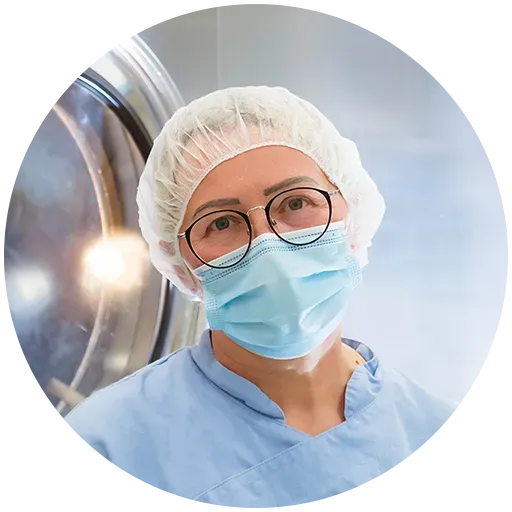
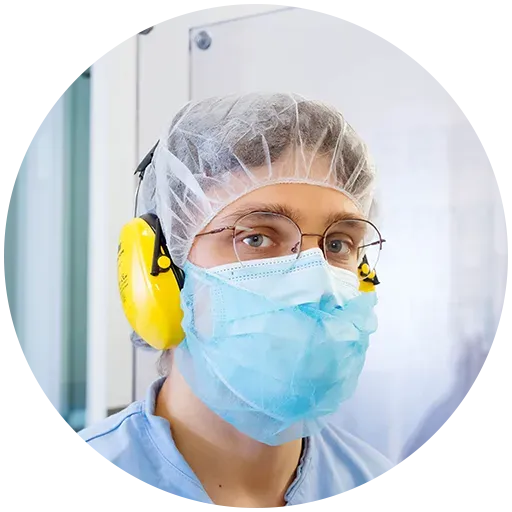
See what the work of an Operator looks like from their perspective – what their experiences and insights are. Perhaps among their answers you will find the information you are looking for and that will help you in your decision to join the Dry Mold Department Team.
[PIOTR] I can say that I have several roles within my work in the Solid Dosage Forms Department. I am responsible for weighing and precisely processing raw materials, for example milling or sieving them before they are used in blends. In the blending process, my job is to prepare mixtures from previously prepared raw materials – all in accordance with production records.
[MAX] I would add that it’s a bit like cooking and preparing dry ingredients for baking. Depending on the recipe, you need to prepare the right ingredients – the raw materials – according to specifications. We measure and weigh them precisely. To achieve the right structure, sometimes we need to sieve them, just like flour, to aerate it so the dough becomes light.
[ALEKSANDRA] I currently work as a Setup Operator, mainly in coating. This is one of the key stages of tablet production and involves covering tablets with a relatively thin coating layer. This is done to make tablets easier to swallow, mask the taste and smell of active substances, or give them color – which helps distinguish tablets if a patient takes multiple products at the same time.
In addition to coating, I also perform other processes, such as initial weighing and preparation of coating solutions.
[MAX] I work as a Production Supervisor. Together with other Supervisors, I’m responsible for the entire production area. My tasks include preparing work schedules, assigning tasks to employees, and developing training plans – mainly for new employees – which are then included in their training logs.
I started working in the Solid Dosage Forms Department as a Process Operator, due to my previous experience. The initial stage involved learning weighing processes, blend preparation, hygiene-related tasks (such as working in the washing area), and becoming familiar with all procedures applicable in the clean zone. These elements are common to everyone starting work in our department.
Because of my prior experience, I was also assigned to a technical process – operating a sachet machine and later a cartoner. After passing internal exams (both theoretical and practical), I was promoted and worked successively as a Setup Operator and then a Lead Operator.
[ALEKSANDRA] I started working at USP through a temporary employment agency. When the vacancy opened, I applied. During the interview, in addition to an HR representative, the Head of the Solid Dosage Forms Department was present.
[MAX] In my case, it looked a bit different. I submitted my CV and shortly afterward had a phone interview, during which I was asked about my previous experience. A week later, I was invited for an on-site interview at Ziębicka Street. Two people attended – the department manager and the recruiter. Soon after, we signed a letter of intent and I was sent for medical examinations, including sanitary tests, which are required for this type of production work. With all results completed, I started work.
[PIOTR] I remember my recruitment process very well. Like Max, I was invited for an interview with a recruiter and the Manager. The meeting had a very pleasant atmosphere, and within a week I received positive feedback. I also remember the onboarding process very positively – I learned a lot about safety procedures and got a close look at how the work is done.
[ALEKSANDRA] Yes, the key thing to know is that work in the Solid Dosage Forms Department takes place in a clean zone, which protects both our processes and the product. When entering the clean zone, we cannot wear makeup or jewelry. We wear special clothing and footwear, hair covers that fully cover the hair, gloves, and masks always. This is all in line with GMP – Good Manufacturing Practices.
[MAX] Everything Ola said is correct. I’d add that at the beginning this can be challenging for new employees – we change clothes when entering and leaving clean and non-clean zones, for example during breaks. If we accidentally touch our face while in the clean zone, we must replace gloves and disinfect them – this is also part of the learning process.
[PIOTR] To sum it up – working in a clean zone requires strict adherence to hygiene procedures, including changing clothes before entry, and hand washing and disinfection.
[ALEKSANDRA] The current onboarding process is much more comprehensive than when I started. New employees are now introduced to a wide range of processes and training modules, which helps them better understand the specifics of the department.
[MAX] Yes, the onboarding process evolves because we continuously improve it. New employees are assigned Mentors – experienced Setup or Lead Operators who are skilled at sharing knowledge. In each production area, experts help new employees understand not only the process itself, but also work organization and best practices.
New employees always work in pairs with their Mentor until they pass an internal exam. After that, they can perform tasks independently and then move on to further training in other processes, depending on needs.
[PIOTR] For me, this stage was mainly about learning procedures. At first, they may seem complicated, but over time everything becomes clear. Safety training is also a big part of this stage, and Production Supervisors play a key support role.
[PIOTR] In my opinion, at least three months of experience are needed to master initial processes and gain sufficient knowledge and practice.
[ALEKSANDRA] That’s true – entry-level positions are less demanding. For example, initial weighing involves preparing precise quantities of raw materials. It’s not difficult, but starting a new job comes with emotions, and repetition is often needed. Within the first three months, these processes can be confidently mastered. More advanced processes are more complex and may take up to six months to learn.
[MAX] From my experience, it can take up to a year for someone without prior experience to fully master initial weighing, blending, hygiene processes, and their first technical process, including passing all required exams.
[ALEKSANDRA] It’s important to understand that this is largely physical work, involving forced body positions. Tasks also include maintaining hygiene of rooms and equipment. Although we produce small items like tablets, the physical effort involved is often underestimated.
[PIOTR] I agree – it’s physical work, and it also involves completing documentation. Accuracy and focus are crucial – mistakes are not acceptable. Hygiene is equally important.
[MAX] I’d add that candidates should be open and willing to learn. For those unfamiliar with pharmaceutical manufacturing, many things may be surprising. But everything can be learned – many excellent Operators started with no experience at all.
It’s also worth mentioning that our work is well structured and follows a fixed rhythm – three shifts during the week and free weekends, which for many people is a significant advantage.